Tuesday, August 12, 2014

Kangundo

Pack and re-pack is our constant theme.  The night before we left for Kangundo we re-organized the medical trunks, packed more pills, organized the family ministry bags to be sure each family also had sheets, then packed it all up again in suitcases. 


In addition we organized all the food supplies that we had purchased at the grocery store (Nakumat) earlier in the day. 


A special surprise was meeting Kate's professor friend formally from Boston College, Bienvenu.  Kate knew he was going to be in Nairobi the same time we were.  We then learned he was in the same part of town.  After emailing, we asked him to join us at our guest house for dinner and to meet the team.  Then, as it turned out, he literally was staying the next block over and we can see his residence from our parking lot.  Now, that's a small world. 


Next morning, really early, we loaded all the trunck, food, and ministry bags and headed to Kangundo.  We needed one entire empty matatu just for the supplies.  The landscape around Kangundo is some of my favorite.  

The mamas of the little village of Manyatta of course greeted us with their beautiful singing and dancing.  The joy on their faces when they see us is so humbling. 

Our first stop this year was to the future site of the medical clinic we will be building come this October.  Everyone gathered to pray and dedicate the land that was graciously donated by Miriam's Mother Monica and stepfather Isaac. 


Then we all walked together up to Isaac and Monica's compound, where...

The mama sang and danced for us some more!


Each of us connected with two families, giving each of them a ministry bag with clothing, sheets, shoes, and flashlight. Then we helped them gather food staples from our food stations.  See all those Ikea bags?  That's what we were collecting them for!  They're full of food and clothing now!


I got to connect with my favorite mama from last year.  


Saturday, August 9, 2014

Teacher Celebration and Adversity

After being with the students in the morning and playing with them on the field, Ann, Judy, Nina and I would return to the Noble Guest House to present our Jamii teacher training. At the conclusion of our five teacher training sessions Judy (aka The Producer) orchestrates a certificate ceremony for the teachers.  Sanna opened with a beautiful solo and then we called the teachers up one at a time to present them with a certificate of completion for the topics we presented (learning styles, assessment, geometry, learning difficulties and trauma.)


Here we are with Teacher Kariuki who teaches levels 4-6.  Ann is also handing out envelopes.  These were monetary gifts of hope for the teachers that were anonymously donated.  We learned that Jamii has been struggling recently to meet payroll because the majority of the families have been unable to pay school fees.  (and Basilus and Esther do not turn them away, unlike other schools)  Most of these families are very small vendors who go into town to "hawk" their wares.  Kenya recently has "decentralized" their government system by placing governors over provinces.  The governor in Eldoret recently decreed that hawkers are no longer allowed within the downtown area, effectively taking away these slum families' meager livlihoods.  

The actual story here is that the governor is of the main tribe currently in power, and all these families from the Langas slum community are of the "wrong" tribes.  This is going on all over Kenya now.  Decentralizing the government has, in effect, increased tribalism and discrimination and Miriam is worried that the next round of elections will be as viscious as it was in 2007, and Eldoret was one of the worst areas for election violence at that time. 

 Here we are giving Esther and Basilus their certificates.  Basilus is always quick to say that Jamii means "family" and if you are at Jamii, no matter what your tribe, you are family.  The teachers are from a variety of tribes and they intentionally teach all the students about the cultural heritage, dances, and songs from their different tribes.  Jamii is in essence an oasis in the midst of the tribalism turmoil that surrounds them, making the monumentous effort to teach respect for all. 

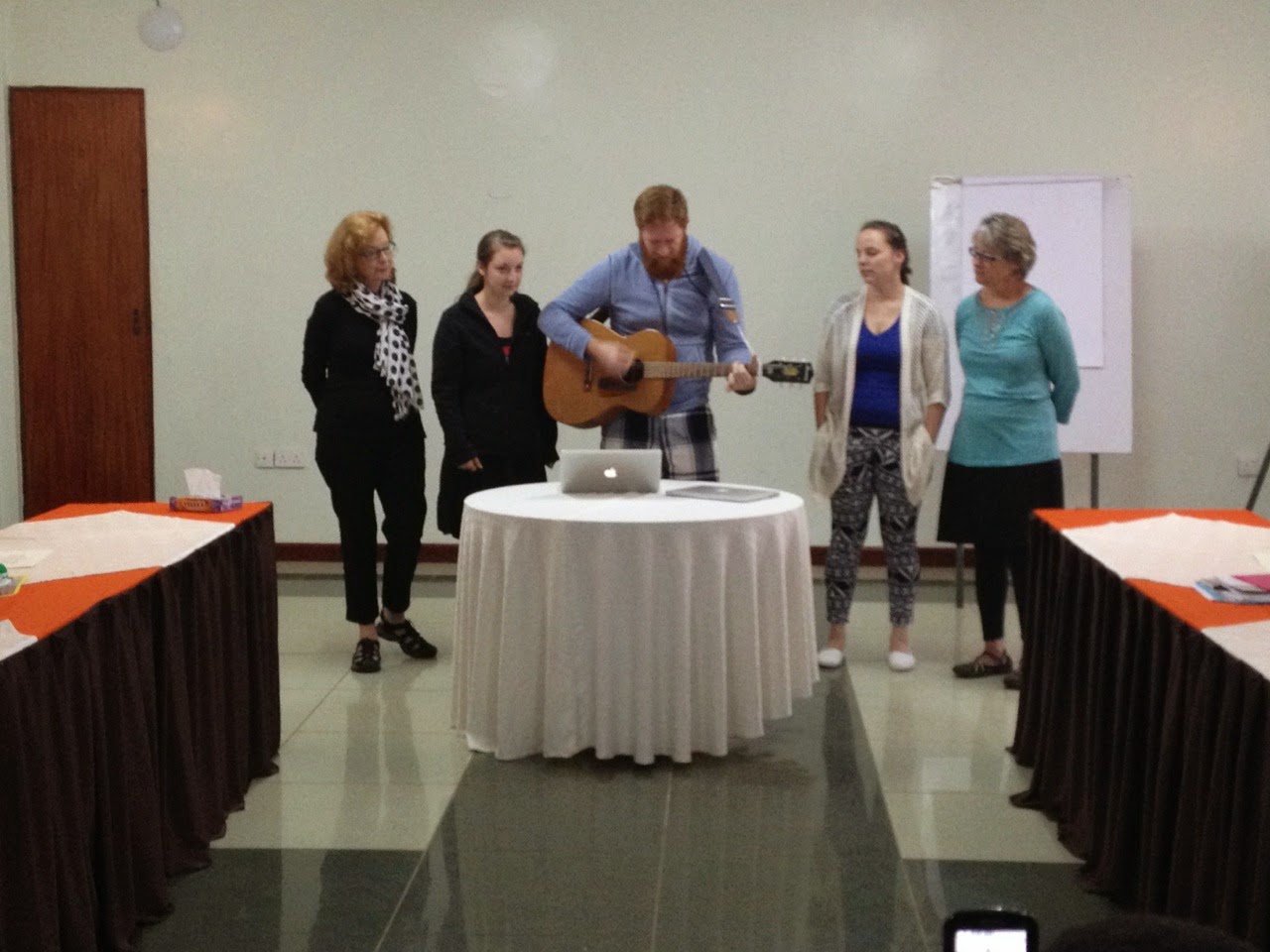
 Because I knew how difficult the last few months had been for everyone at Jamii, I asked Lance to come and sing the song "My Hope is in You" at the closing of our time together.  The lyrics are below.  Basilus and the whole team of teachers then thanked us and sang and prayed for us.  Saying our goodbyes was so difficult as we left them for another year, praying that they continue to be strong in the face of so much adversity.  


"My Hope Is In You"

I meet with You and my soul sings out
As your word throws doubt far away
I sing to You and my heart cries
"Holy! Hallelujah, Father, You're near!"

My hope is in You, Lord
All the day long, I won't be shaken by drought or storm
A peace that passes understanding is my song
And I sing my hope is in You, Lord

I wait for You and my soul finds rest
In my selfishness, You show me grace
I worship You and my heart cries "Glory
Hallelujah, Father, You're here!"

My hope is in You, Lord
All the day long I won't be shaken by drought or storm
A peace that passes understanding is my song
And I sing my hope is in You, Lord

I will wait on You
You are my refuge
I will wait on You
You are my refuge

My hope is in You, Lord, all the day long
I won't be shaken by drought or storm
My hope is in You, Lord
All the day long I won't be shaken by drought or storm

A peace that passes understanding is my song
And I sing my hope is in You, Lord
My hope is in You, Lord, yeah
My hope is in You, Lord

More Healing stories from Jamii


Jamii has had a rough year.  Two months ago, one of their level 6 students who had been with Jamii since its beginning, collapsed after running to school one morning.  He was rushed to the hospital but did not survive.  The school has been reeling from this and from the rumors in the community suggesting to the parents that the school had done something to the student.  To help settle this, Basilus and Esther paid for a post mortem which determined the cause was congenital.  They also paid for the funeral, which in Kenya, can be very expensive.  Also, teacher Sophie had her first child recently, but the baby lived only a month.  She was home recovering during our visit, so we were very sorry not to see her.  

All this to say, it is no accident that our theme for this year's trip is "Healing and Restoration."  It is no wonder that the teachers have been asking for assistance and resources on how to address trauma in their students (which also really means in their lives as well.)  Much of what Ann shared in our teacher training addressed this.  Then one of the teacher's written comments we received during our training sessions indicated that one of the other level 6 students has now been showing signs of depression and not wanting to eat since his friend died.  
Since they do not have grief counselors or other resources like we have in our schools in the states, it quickly became apparent to us that no one was really talking about the death of this student, so the students really have not had the opportunity to share their grief.  I arranged with their teacher Mr. Kariuki for Ken, a retired policeman who is now a chaplain, and Lance and I to meet with the level 6 students before they went home for the August holiday.  


Ken did a remarkable job sharing with the students, validating their grief, telling them that it is okay to be feeling sad, and to be missing their friend.  The students were hanging on every word, nodding their heads, whispering yes to many things Ken shared.  He reassured them of God's love for them and for their friend.  I followed up with a few additional comments about how working through grief takes time and that they should not feel ashamed or surprised if they continued to feel sad for months to come.  Lance closed our time together with the students with a beautiful prayer.  It was one of those holy moments that affirmed to me that we were where God wanted us to be.


 On another healing note, our medical team provided 5 days of care for the Jamii students and their families, the rescue center community, and the Jamii teachers.  They set up their clinic on the Jamii field and saw over 500 people.  Their dedication and compassion continue to humble and amaze all of us. 


Last Day at Jamii

The last day at Jamii School is always one of the most amazing and most difficult.  The teachers and students put on a performance where each class presents something from the week, whether reciting memory verses or performing skits from the lessons on healing. 


Michelle had written three skits for the older students to perform and had worked with them all week.  She was so proud of them and their hard work.  


Lance was once again in his element leading all the students in the songs he taught them over the week. 


Then there is the saying goodbye.  One student Michelle got to know well kept asking Michelle to take her home with her.  So hard.  Alfredo was entranced with twin girls who had a hard time letting go of him. 


More goodbyes.


Goodbye little Judy!! I will miss your sweet hugs every morning.  


And one more goodbye to Tabitha with her red gum boots. 


Healing Lessons at Jamii

This year's theme for our Vacation Bible School lessons at Jamii was Healing.  The teachers taught the lessons and we provided crafts and songs to go along.  They are so anxious for us to come each morning and when I enter Veronica's class they chant, "Welome teacher, welcome to our class!"  Little Judy is the cutie with her head on her arm.  


 The first lesson was Naaman healed of leprosy.  And the second was Jesus healing blind Bartameus.  We had the kids make blindfolds and then they were to draw a face without being able to see.
 They all broke out giggling and laughing when they looked at their drawings.  

Then we cut out eye holes and they drew their faces again. 


The kids loved Ken and his white beard and they call him "Bapu Ken" for Grandpa Ken.  It was so touching to see Ken love on all these kids and have them respond so well to him. 

 The last lesson was on Peter healing the lame man.  Teacher Ruth had the students act out the lesson as she told the story.  

 Then they colored a sheet about the lame man while we passed out all the hats that we brought to them from our past team mate Linda who along with her friends from church made hundreds of hats for the Jamii kids.  

Here they are sporting their new hats!


After the lessons we all walk to the field for some recess games.  We never go empty handed to the field. 

Friday, August 8, 2014

At the Field

Here we are at the field which will be the future site of the new Jamii school.  The new well has been dug and the new bath house complete with boys and girls toilets, showers, and western toilets for the staff (yay!) have been completed.  They waited for our team to come to dedicate the new bath house.   Because I was the one team member on the board of Kizimani, I got to cut the ribbon at the dedication ceremony.  Woo hoo!  That was a first!  
 Every day we went with the kids out to the field to play games after our morning sessions.  Lance was the pied piper leading kids in learning and singing the songs that went with our theme of healing. The three lessons we presented were Naaman healed of leprosy, Jesus healing blind Bartameus, and Peter healing the lame man.  It was so amazing to see Lance leading swarms of kids around the field singing and playing the guitar as he went.  He began learning the guitar this year just to come to Kenya with us.  He was in his element for sure.

 Here's Ann playing games with the little ones.  She had a good time teaching them pat a cake which they didn't know before hand.  It was so good to see all the students enjoying themselves and having fun.
And just in case you are interested, here are the current bathrooms that the children have to use.  Everyone is anxious to have the new school completed so we can say goodbye to these forever.